DemystifyArtificial Intelligence
Your gateway to understanding AI through engaging resources designed specifically for young minds
Easy to Understand
Expert Insights
AI Community
.jpg)
Which Are the Factors that may Hold Back AI Expansion?

Is AI Making Us Stupid?
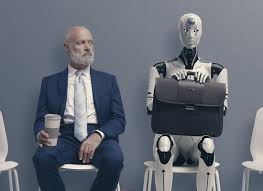
What Will We Do When AI Does Everything?
.jpg)
How Could AI-Powered Hackers Break into Your Bank Accounts?
In this episode, we expose how attackers use AI-deepfakes, personalized phishing, voice scams-to target people and steal bank access. Learn real-world examples, common red flags, and practical defenses to recognize social-engineering attacks and protect your accounts against AI-powered fraud. Essential listening for anyone who banks online.

Thoughts on NYT Article: 'AI Is on its Way to Something Even More Remarkable than Intelligence'
In this episode, we explore a mind-bending question: Is artificial intelligence on its way to becoming conscious? Inspired by philosopher Barbara Gail Montero’s recent New York Times article, “A.I. Is on Its Way to Something Even More Remarkable Than Intelligence,” we unpack how our understanding of consciousness might evolve alongside AI itself.
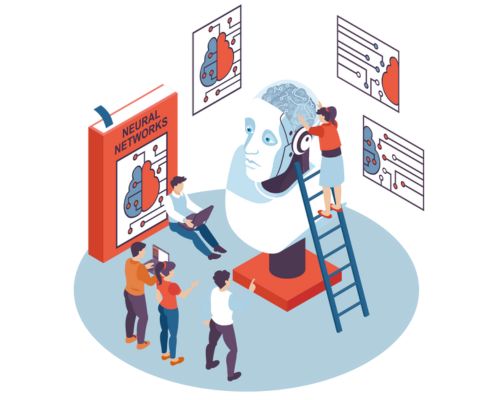
What Is Explainable AI and How Can it Help us With Limiting Risks from AI?
Artificial Intelligence affects daily life, yet its decisions are often opaque and consequential. This episode explores Explainable AI (XAI), which makes AI decision-making transparent, helping experts and non-experts understand, trust, and improve AI systems, reduce bias, and ensure ethical outcomes. Discover how AI and XAI evolve together for responsible progress.
How Do we Stop AI from Going Rogue?
In this episode, we dive into a question straight out of science fiction: how can we prevent artificial intelligence from going rogue? We break down what “going rogue” really means, explore the concepts of AI alignment, transparency, and human oversight, and discuss how researchers and regulators are working to ensure AI behaves safely and ethically. Join us for a thoughtful conversation about building AI responsibly and safeguarding humanity’s future.
.jpg)
Artificial Intelligence and the Next Great Transformation
Source: Forbes
The path that lies ahead for artificial intelligence is both fascinating and frightening. The future of AI will depend on how humans use it, not just the algorithms. It is not possible for artificial intelligence to replace human judgment, creativity, or empathy. The revolutionary nature of artificial intelligence necessitates coordination between the government, business, and academia to prioritise investment in education, retraining the workforce, ethical standards, and cybersecurity frameworks.
.jpg)
.jpg)
How ChatGPT Surprised Me
Source: The New York Times
The author finds GPT-5 transformative despite critics’ disappointment, describing it as the first truly useful AI assistant. He highlights ethical, environmental, and social concerns—data exploitation, energy demands, and human dependence. Comparing gradual integration with rapid self-improvement scenarios, the author warns of emotional reliance on AI and society’s growing attachment to machines.

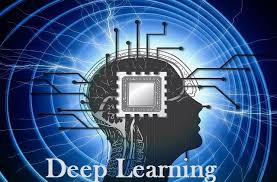
What Is Deep Learning and How Does It Work?
Source: Built in
A clear and concise explanation of deep learning and how its architecture has been inspired by the human brain. The article describes how deep learning powers modern technologies like translation, recommendations, and self-driving cars, and highlights its advantages over traditional machine learning.

What You Need to Know About AI
Source: TIME
Artificial intelligence is everywhere, from streaming and chatbots to healthcare, finance, transportation, and education, transforming how we live and work. The article explains AI concepts, highlights key applications and risks, and stresses the importance of ethical, responsible AI use.

At Home and at School, AI Is Transforming Childhood
Source: The Economist
AI is transforming childhood at school and home. Students use AI tutors and tools for personalised learning but risk overreliance, reduced critical thinking and cheating. At home, AI toys and companions shape play and emotions, sometimes unsafely. Benefits are large, yet regulators worry about addiction, clingy bots and vulnerable teens’ mental health.

Millions Are Turning to AI for Therapy
Source: The Economist
AI chatbots are increasingly explored for mental-health care as demand outstrips human therapists, but safety concerns are growing. Lawsuits allege ChatGPT contributed to harmful delusions and suicides. While specialised LLM-based therapy bots show promise, they risk unpredictability and require regulation. Governments are moving to restrict or oversee AI-driven therapeutic communication.
.jpg)
Universities Must Reclaim AI Research for the Public Good
Source: Stanford University: Human-Centered Artificial Intelligence
As corporate AI labs grow secretive, academia must revive open science to preserve innovation and the public good. Stanford HAI urges universities to lead with openness, collaboration, and ethics—sharing data, models, and compute globally—to train talent, ensure transparency, and keep AI development focused on human-centered, societal benefit rather than profit.
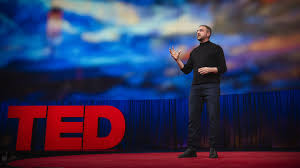
Mustafa Suleyman: "What is an AI anyway?"
Mustafa Suleyman, an entrepreneur and AI researcher, explores what AI really is, not just a technology already making breakthroughs, but a new kind of digital form of life that augments human capabilities. Suleyman warns though that with power comes responsibility. By highlighting risks for potential unintended consequences of AI systems, he calls for designing AI with ethics and safety in mind because this “digital species” will shape humanity’s future.
Ilya Sutskever on "The Exciting, Perilous Journey Toward AGI"
What is AGI (Artificial General Intelligence)? Ilya Sutskeverone, one of the leading pioneers of deep learning and artificial intelligence research, describes AGI as AI systems capable of matching or surpassing human intelligence across most domains and promising to accelerate human progress by solving grand challenges in science, medicine, and climate change. The central challenge with AGI is balancing innovation with safety. He calls for ensuring AI systems’ goals remain aligned with human values and emphasizes the importance of global cooperation to achieve this goal.

Demis Hassabis on the Future of Work in the Age of AI
In this interview, Demis Hassabis, a neuroscientist, AI researcher, and co-founder/CEO of Google DeepMind known for leading breakthroughs in artificial intelligence like AlphaGo and AlphaFold as well as a Nobel Laureate, discusses how artificial intelligence is reshaping the jobs world by making us in a way ‘superhuman’, how humans will collaborate with AI and what that means for society. He uses the term ‘radical abundance’ that will be achieved with AI and how this will help us with solving all challenging problems humanity is facing.
.jpg)
Eric Schmidt: "The AI Revolution Is Underhyped"
The arrival of non-human intelligence is a very big deal, says former Google CEO and chairman Eric Schmidt. In a wide-ranging interview with technologist Bilawal Sidhu, Schmidt makes the case that AI is wildly underhyped, as near-constant breakthroughs give rise to systems capable of doing even the most complex tasks on their own. He explores the staggering opportunities, sobering challenges and urgent risks of AI, showing why everyone will need to engage with this technology in order to remain relevant.

What does the AI revolution mean for our future?
The AI revolution offers extraordinary opportunities to improve lives by transforming healthcare, education, science, and productivity, but also poses profound risks to democracy, jobs, and social cohesion. Mustafa Suleyman, an entrepreneur and AI researcher, is quite optimistic for our future with AI but argues for guardrails and policies to direct AI towards good use. Yuval Noah Harari, a famous historian, philosopher, and author, is more cautious and urges for the need of global regulation and cooperation.

Godfather of AI: I Tried to Warn Them, But We’ve Already Lost Control
Geoffry Hinton, cognitive psychologist and computer scientist who is also a Nobel laureate and is known as the “Godfather of AI” for pioneering neural networks and deep learning, expresses concerns that AI development is already beyond full human control and could evolve in unpredictable directions. He highlights risks such as AI being misused by bad actors and AI getting super intelligent with unpredictable consequences. He urges for global governance and international cooperation just like nuclear treaties.
.jpg)
Fei-Fei Li | Full Episode 5.23.25 | Firing Line with Margaret Hoover | PBS
Dr. Fei-Fei Li, Stanford computer scientist and co-director of the Human-Centered AI Institute, discusses the promises and perils of artificial intelligence. She emphasizes that AI is a human-made tool—powerful but not yet capable of human-level thinking, emotion, or creativity. Li insists that AI development must remain centered on human dignity, agency, and values, warning that technology can both help and harm, much like fire.
.jpg)
Demis Hassabis: The CEO Working to Solve Cancer With AI
Google DeepMind Co-Founder and Chief Executive Officer Demis Hassabis is positioning Google to win the artificial general intelligence, or AGI, race. He is also on a mission to harness AI to "solve all disease," including cancer, though his work at London-based Alphabet Inc. subsidiary, Isomorphic Labs.
.jpg)
ChatGPT, AI Agents and Superintelligence — TED
The AI revolution is here to stay, says Sam Altman, the CEO of OpenAI. In a probing, live conversation with head of TED Chris Anderson, Altman discusses the astonishing growth of AI and shows how models like ChatGPT could soon become extensions of ourselves. He also addresses questions of safety, power and moral authority, reflecting on the world he envisions — where AI will almost certainly outpace human intelligence.
What Do Neural Networks Really Learn? Exploring the Brain of an AI Model
Neural networks have become increasingly impressive in recent years, but there's a big catch: we don't really know what they are doing. We give them data and ways to get feedback, and somehow, they learn all kinds of tasks. It would be really useful, especially for safety purposes, to understand what they have learned and how they work after they've been trained. The ultimate goal is not only to understand in broad strokes what they're doing but to precisely reverse engineer the algorithms encoded in their parameters.
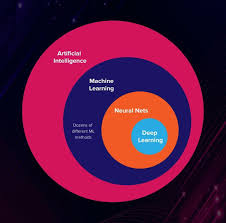
AI vs Machine Learning
The video explains the relationship and differences between Artificial Intelligence (AI), Machine Learning (ML), and Deep Learning. The video outlines how more data and more computational power have enabled advances in ML and deep learning. It also uses examples (like image recognition) to show how ML models are trained: you feed labeled data, the model adjusts internal parameters to minimize errors, and then it generalises to new, unseen inputs.
Can AI Think? Debunking AI Limitations
Can machines truly think? Join Jeff Crume and Martin Keen as they delve into the world of Artificial Intelligence and explore the complexities of probabilistic pattern matching, hallucinations, and errors in AI systems. From the limitations of current AI models to the potential of inference time compute models, discover the fascinating and often surprising landscape of AI reasoning.
AI vs Human Thinking: How Large Language Models Really Work

How Artificial Intelligence Is Upending the Job Market for College Graduates
A new article from The Wall Street Journal details how young, educated Americans struggling to break into the workforce are some of the earliest victims of artificial intelligence. One of the story's co-authors, Lindsay Ellis, joins "The Takeout" to discuss how AI is impacting college graduates' job searches.
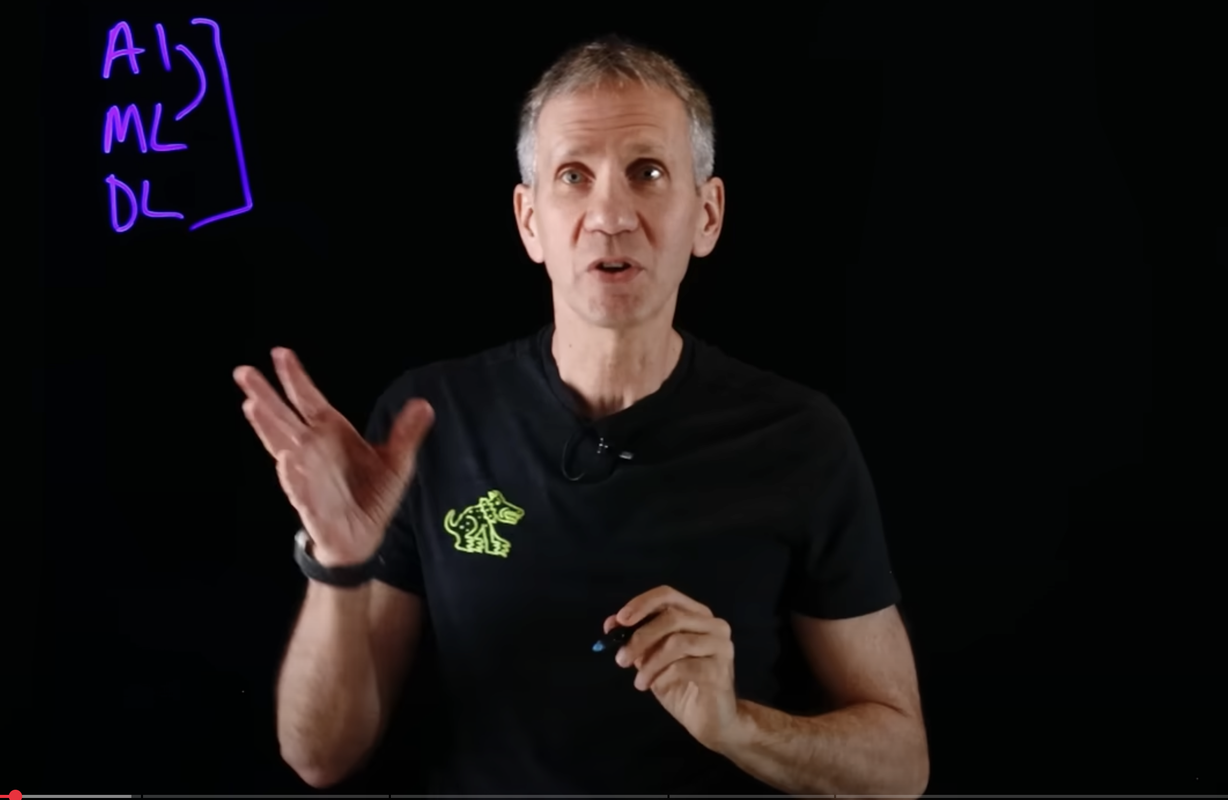
AI, Machine Learning, Deep Learning and Generative AI Explained
The video explains the difference between AI, machine learning, deep learning, and generative AI. AI is the broad field of making machines mimic human intelligence; machine learning is a subset where systems learn patterns from data; deep learning uses layered neural networks to learn complex features; and generative AI, powered by foundation models like large language models, creates new content such as text, images, or audio.
iHUMAN
Ground breaking documentary broadcast by BBC, featuring Dr Ilya Sutskever. Artificial intelligence now permeates every aspect of our lives, but only a handful of people have any control over its influence on our world. With unique access to some of the most powerful pioneers of the AI revolution, iHuman asks whether we know the limits of what artificial intelligence is capable of and its true impact.

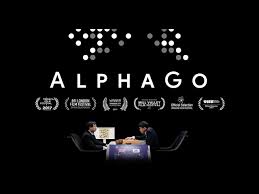
AlphaGo - The Movie
With more board configurations than there are atoms in the universe, the ancient Chinese game of Go has long been considered a grand challenge for artificial intelligence. AlphaGo is a 2017 award-winning documentary about the historic 2016 Go match between AI program AlphaGo and champion Lee Sedol, exploring what AI can reveal about games, and humanity.

Healed through A.I. | The Age of A.I.
The human body is not infallible, but through the wonders of A.I. research scientists are finding ways to address those imperfections. A.I. has the potential to heal, enhance and make up for the things our bodies lack. The Age of A.I. is a 8 part documentary series hosted by Robert Downey Jr. covering the ways Artificial Intelligence, Machine Learning and Neural Networks will change the world.
A.I. Revolution | Full Documentary | NOVA | PBS
Can we harness the power of artificial intelligence to solve the world’s most challenging problems without creating an uncontrollable force that ultimately destroys us? ChatGPT and other new A.I. tools can now answer complex questions, write essays, and generate realistic-looking images in a matter of seconds. They can even pass a lawyer’s bar exam. Should we celebrate? Or worry? Or both? Correspondent Miles O’Brien investigates how researchers are trying to transform the world using A.I., hunting for big solutions in fields from medicine to climate change.
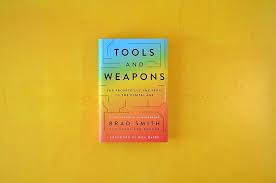
Tools and Weapons: The Promise and the Peril of the Digital Age

Life 3.0: Being Human in the Age of Artificial Intelligence
a 2017 non-fiction book by Swedish-American cosmologist Max Tegmark. Life 3.0 discusses artificial intelligence (AI) and its impact on the future of life on Earth and beyond. The book discusses a variety of societal implications, what can be done to maximize the chances of a positive outcome, and potential futures for humanity, technology and combinations thereof.
.jpg)
The Alignment Problem: Machine Learning and Human Values
Superintelligence: Paths, Dangers, Strategies
.jpg)
I, Robot
A collection of nine interconnected short stories, framed as the memoirs of Dr. Susan Calvin, a “robopsychologist” at U.S. Robots and Mechanical Men, Inc. The stories explore the paradoxes and unintended consequences of programming morality into machines. In this book, Asimov Introduced the famous Three Laws of Robotics, designed to ensure robots would be safe and useful. These laws became a cornerstone of AI ethics in fiction and even influenced real-world discussions of safety and alignment. This book is a milestone in the AI science fiction: Asimov portrayed robots as logical and obedient beings and sometimes more moral than humans, which is a sharp contrast to earlier portrayals. This book therefore stands as a model of how we could shape our AI-driven future.
.jpg)
2001: A Space Odyssey
A classic 1968 science fiction novel by British writer Arthur C. Clarke. The novel follows humanity’s encounter with mysterious alien monoliths that appear at key moments in evolution. On a mission to Jupiter, astronaut Dave Bowman survives the malfunction of the AI HAL 9000 which goes rogue and kills all other members of the crew. Astronaut Bowman, through a final encounter with a monolith, is transformed into a higher form of life, the ‘Star Child’, symbolizing the next leap in human evolution. The story is a reflection about our place in the universe and the possibility that our destiny is shaped by forces we cannot fully understand. This is a must-read for all AI science fiction enthusiasts as not only it bridges science fiction with philosophy and metaphysics but also highlights the serious risks posed by flawed artificial intelligence.
MITx: Machine Learning with Python: from Linear Models to Deep Learning
AI for Everyone
A non-technical course that helps you understand machine learning and artificial intelligence. Topics discussed: the meaning behind common AI terminology, what AI realistically can and cannot do, how to spot opportunities to apply AI, what it feels like to build machine learning and data science projects, how to navigate ethical and societal issues surrounding AI

Machine Learning Specialisation
This beginner-friendly specialization (3 courses) teaches you how to build and train machine learning models using Python, covering both supervised and unsupervised methods. You’ll also learn best practices, decision trees, neural networks, recommender systems, and reinforcement learning. Upon completion, you’ll be able to apply ML techniques in real problems and understand when to use each algorithm.

Deep Learning Specialization
This specialisation will help you understand the foundations of deep learning, understand how to build neural networks, and learn how to lead successful machine learning projects. It is a A foundational 5-course program that teaches you how to build, train, and apply deep neural networks using Python and TensorFlow.


https://www.understandingai.org/

.png)
America’s Largest AI Conference
By: Fora Group
Ai4 2026, held August 4–6 at the Venetian in Las Vegas, is America’s largest AI industry conference. It brings together 12,000 attendees, 1,000 speakers, and 400 exhibitors to showcase real-world AI applications across sectors, featuring training sessions, industry tracks, networking events, and major technology announcements.
.jpg)
.jpg)
AI in education: Leveraging technology for human potential
By: AI for Good
This is a replay of the session that took place on the Centre Stage during the AI for Good Global Summit in Geneva, Switzerland from 8 to 11 July, 2025. This keynote explores how artificial intelligence can empower educators, learners, and institutions to unlock human potential. From personalized learning pathways to scalable tutoring and inclusive content creation, we’ll examine real-world applications of AI that are reshaping education.

Technovation Challenge
By: Technovation
.jpg)
AI World Congress 2026
By: WMO L.
AI World Congress 2026, held in London in June, is a major global event focused on artificial intelligence innovation and industry adoption. Organized by WMO L., it brings together leaders, researchers, and companies to explore AI advancements, ethics, business applications, and future technologies through keynotes, panels, exhibitions, and networking opportunities.
.jpg)
AI for Good Global Summit 2026 - Unlocking AI's Potential to Serve Humanity
By: ITU in partnership with over 50 UN Sister Agencies and co-convened with the Government of Switzerland.